The Real Numbers Behind Opening a Reformer Pilates Studio in Singapore: What Operators Must Understand
The reformer pilates business is not cheap to enter.
Every operator who has done it successfully will tell you: the capital requirements are real, the setup complexity is significant, and the operators who underestimate either tend to find themselves in financial trouble before their member base reaches sustainability.
The operators who get it right also tend to build among the most financially resilient boutique fitness businesses in Singapore’s market.
Understanding which side of that divide you end up on starts with the numbers.
The Equipment Investment: What You Actually Need
A single commercial-grade pilates reformer from a quality manufacturer represents a meaningful capital outlay per unit.
This is not the consumer-grade reformer sold by fitness retailers for home use. Commercial reformers are built for ten to fifteen years of intensive daily use under a range of body weights and training intensities. They have significantly more robust frames, more precisely calibrated spring systems, and the adjustability range that a diverse client population requires.
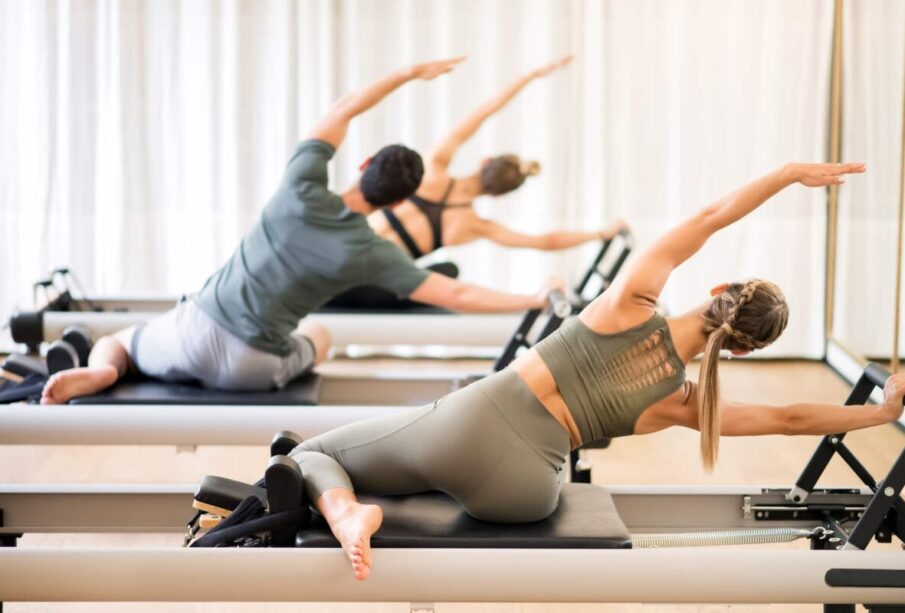
Most operators of serious Reformer pilates Singapore studios plan their initial setup around a minimum of six reformers. This minimum allows two simultaneous small-group classes and ensures that equipment downtime for maintenance never eliminates the programme’s class delivery capacity.
Beyond reformers, the minimum equipment list for a credible studio includes:
- Jump boards for each reformer for the cardio and lower limb conditioning programming that distinguishes reformer pilates from mat pilates
- Tower units or wall tower attachments for vertical spring work that significantly expands exercise variety
- Cadillac or trapeze table for specialised clinical and advanced programming
- Wunda chairs for the standing balance and functional strength work that reformer-only studios cannot offer
The total equipment investment for a properly configured six-reformer studio with the supplementary equipment that a complete programming capability requires is substantial, and operators who budget only for the reformers themselves consistently discover they have undercapitalised.
Floor Space: The Number Most Business Plans Get Wrong
Reformers are large.
Each unit requires floor space for the machine itself, clearance for the carriage movement range at the foot end, accessible space at the tower or box end for teacher adjustment, and the lateral clearance that prevents practitioners from striking adjacent machines during exercises with arm or leg extension.
The minimum practical floor space allocation per reformer for a commercial studio where teachers can safely move between machines and practitioners have adequate clearance is more generous than most business plans assume.
A six-reformer studio therefore requires a studio floor space that excludes changing rooms, reception, storage and circulation space. Add those, and the total square footage requirement is significant.
In Singapore’s commercial property market, this floor space requirement has direct rental implications. Central district commercial rents per square foot are substantial, and the floor space requirements of a proper reformer studio make the monthly rental commitment one of the largest fixed costs in the business model.
Operators who attempt to fit reformer studios into spaces that are too small compromise either the safety clearances or the class capacity that makes the revenue model viable. Neither compromise is acceptable, and the operators who make them invariably discover this the hard way.
Revenue Per Machine: The Core Financial Metric
The financial viability of a reformer studio depends on achieving adequate revenue per machine per day.
The calculation is straightforward.
Each reformer generates revenue when it is occupied by a paying client. Daily revenue per machine is therefore the product of the hourly rate equivalent of the session format and the number of occupied hours per day.
Most Singapore reformer studios run sessions of 55 minutes to allow changeover time between bookings. This allows a maximum of approximately eight sessions per machine per day across a 7am to 10pm operating day, though practical scheduling of client bookings rarely achieves this theoretical maximum.
The realistic target for a well-managed Singapore reformer studio is six to seven occupied sessions per machine per day, five to six days per week. Below this utilisation threshold, the rental and equipment servicing costs become very difficult to sustain profitability against.
Achieving this utilisation requires both a sufficient member base and a class schedule that is calibrated to actual demand patterns rather than theoretical ones. The peak demand periods for Singapore reformer studios are predictable: 7am to 9am pre-work, 12pm to 2pm lunchtime, and 6pm to 9pm post-work. The challenge is building sufficient off-peak demand to achieve the daily utilisation that the financial model requires.
The Private Session Premium and Why It Changes the Model
Private reformer sessions command per-session rates that are substantially above small-group session rates.
For studios with clinical positioning, post-surgical rehabilitation clients or executive wellness clientele, private sessions represent a meaningfully higher margin revenue stream that can support the overall studio economics when occupancy in group sessions is below the target threshold.
Building a private session client base requires teacher expertise that can command and justify premium pricing, a reputation for clinical quality that generates healthcare professional referrals, and the scheduling flexibility to accommodate private clients at times that the group schedule cannot always offer.
Studios that invest in this clinical reputation as a deliberate business strategy, positioning their private session capability as a healthcare-adjacent service rather than simply a premium yoga alternative, create a revenue stream that is less price-sensitive and more referral-driven than group session marketing can produce.
Yoga Edition has developed its reformer pilates offering with both the equipment investment and the programme quality that the Singapore market requires, building a financially sustainable model on the foundation of genuine clinical and movement quality rather than on the volume-discount economics that compromise too many boutique fitness businesses in this city.